.png)


© 2025 Cedar Solutions Roofing powered by Tauri social.
Blog Post
Siding and Wind: How Exterior Walls Handle Pressure
Wind is one of the most misunderstood forces acting on a home. Most homeowners think of wind as something that pushes against walls, testing strength from the outside in. But in reality, wind behaves more like a pressure system than a simple force. It moves around a home, accelerates at edges, creates suction at corners, and pulls as much as it pushes. On Long Island, where coastal storms bring sustained winds and sudden gusts, siding isn’t just about covering walls, it’s about managing pressure. The way siding is installed, supported, and integrated into the home determines whether it resists wind effectively or gradually weakens under it.
Wind Doesn’t Just Push, It Pulls and Lifts
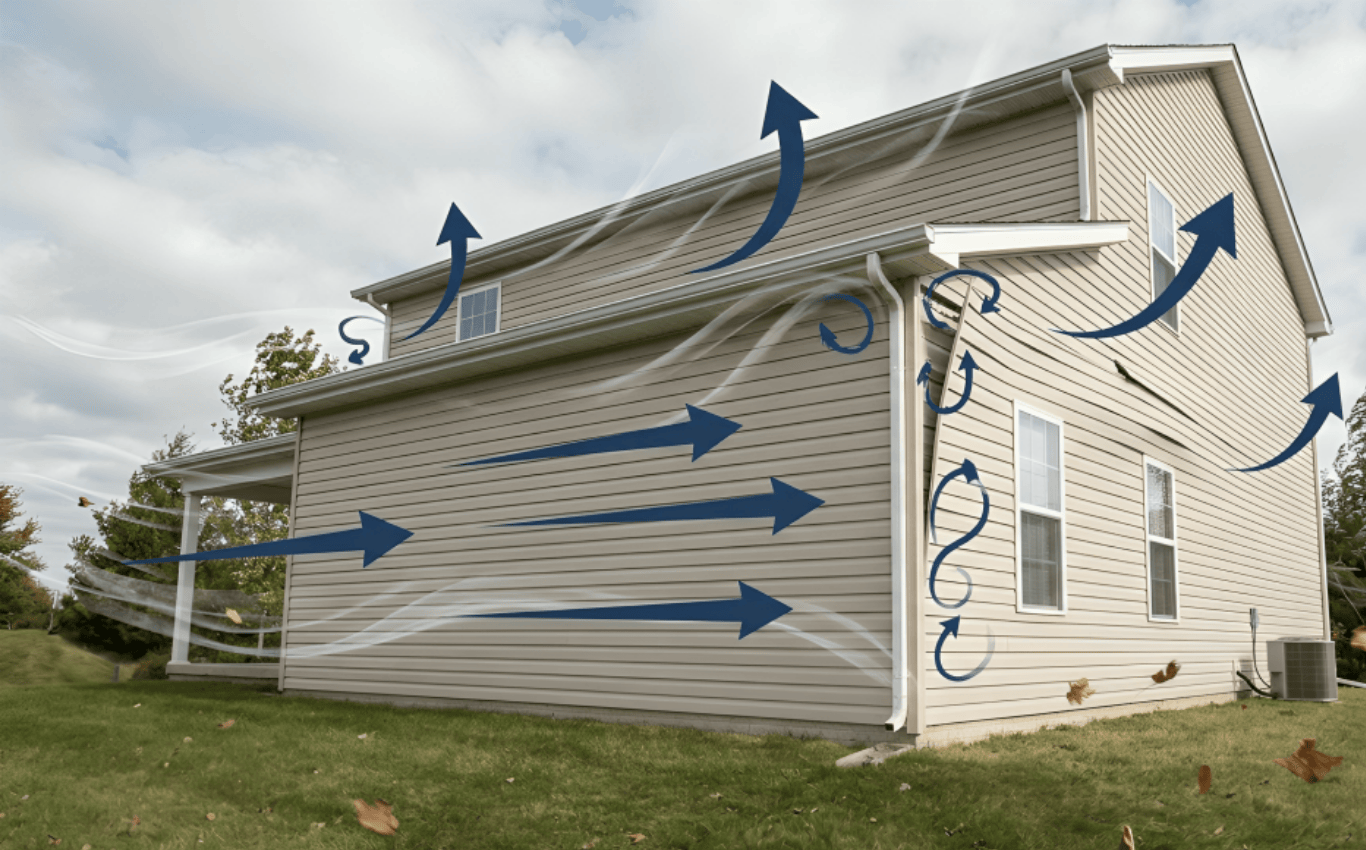
Understanding wind behavior is the first step in understanding siding performance.
Negative Pressure Is the Real Threat
As wind moves over and around a home, it creates areas of low pressure that can pull materials outward. This is especially common along roof edges, corners, and upper wall sections. Siding that is not properly fastened or designed to flex under pressure can loosen over time, even if it appears secure.
Corners and Edges Experience the Most Stress
Flat wall surfaces experience relatively consistent pressure, but edges and corners face turbulence. Wind speeds increase as they wrap around these points, placing more stress on siding panels and trim. This is where poorly installed systems often begin to fail.
Uplift Forces Travel Downward
Wind uplift doesn’t stop at the roofline. It travels down walls, affecting how siding panels move and respond. This is why siding must be considered alongside Roofing Systems, not as a separate element.
Siding Must Be Installed for Movement, Not Rigidity

One of the biggest misconceptions is that tighter installation equals stronger performance.
Over-Fastening Creates Long-Term Problems
When siding is fastened too tightly, it loses the ability to expand and contract naturally. Under wind pressure, rigid panels are more likely to crack, warp, or detach because they cannot absorb movement.
Controlled Flexibility Improves Durability
Proper installation allows siding to move slightly without compromising its integrity. This controlled flexibility helps panels withstand repeated wind cycles without weakening over time.
Fastener Placement Matters More Than Quantity
Adding more fasteners does not necessarily increase strength. What matters is placement, spacing, and alignment. Precision installation ensures that pressure is distributed evenly across the system rather than concentrated in stress points.
Transitions and Trim Control Wind Behavior

Flat siding panels are only part of the story. The real performance comes from how edges and transitions are handled.
Corners Are Critical Pressure Points
Corners experience both positive and negative pressure simultaneously. Without reinforced trim and proper detailing, these areas can loosen first, creating entry points for wind-driven rain.
Window and Door Openings Disrupt Airflow
Every opening in a wall changes how wind moves across the surface. Improperly detailed window trim or flashing allows air and moisture to penetrate behind siding. This is one of the most common failure points in exterior walls.
Custom Fabrication Strengthens Weak Areas
Precision metal detailing plays a key role in stabilizing transitions and reducing vulnerability. Properly designed flashing and trim from Custom Fabrication ensure that edges remain secure even under fluctuating pressure.
Coastal Environments Increase Wind Stress

Wind behaves differently near the coast, and siding must be designed accordingly.
Salt Air Weakens Materials Over Time
Salt accelerates corrosion and material fatigue, especially at fasteners and seams. This weakens the overall system, making it more susceptible to wind damage.
Open Landscapes Allow Higher Wind Speeds
Homes near the water often lack natural wind barriers like dense tree coverage. This exposes siding systems to higher sustained wind speeds and stronger gusts.
System Integration Determines Long-Term Performance
Siding must work in coordination with roofing, flashing, and structural framing. A well-designed Siding System doesn’t just resist wind, it distributes pressure across the entire exterior envelope.
Many examples of siding systems built to withstand coastal wind conditions can be seen across Cedar’s completed work on the Projects Page.
Conclusion: Wind Resistance Is Designed, Not Assumed
Siding is not simply a decorative layer, it is a structural component that must respond to dynamic forces. Wind pressure, suction, and turbulence constantly test exterior walls, especially in coastal environments like Long Island. Homes that perform well over time are not the ones with the most expensive materials, but the ones with the most thoughtful installation and integration. When siding is designed to move, supported by proper fastening, and reinforced at transitions, it becomes part of a complete system that protects the home from all directions.
share via