© 2025 Cedar Solutions Roofing powered by Tauri social.
Blog Post
Where Water Decides to Go: The Role of Custom Metal in Every Home
Water doesn’t need a large opening to cause damage. It doesn’t break through walls or force its way inside, it simply follows the easiest path available. It moves with gravity, pressure, and surface tension, slipping through seams, collecting at transitions, and settling in places most homeowners never think about.
The real question isn’t whether water will reach your home, it’s where it will go once it does. And that answer is not controlled by shingles or siding alone. It’s controlled by custom metalwork. Custom fabrication determines how water is directed, where it exits, and whether it leaves the structure safely or stays trapped inside it.
Water Always Follows the Path You Give It
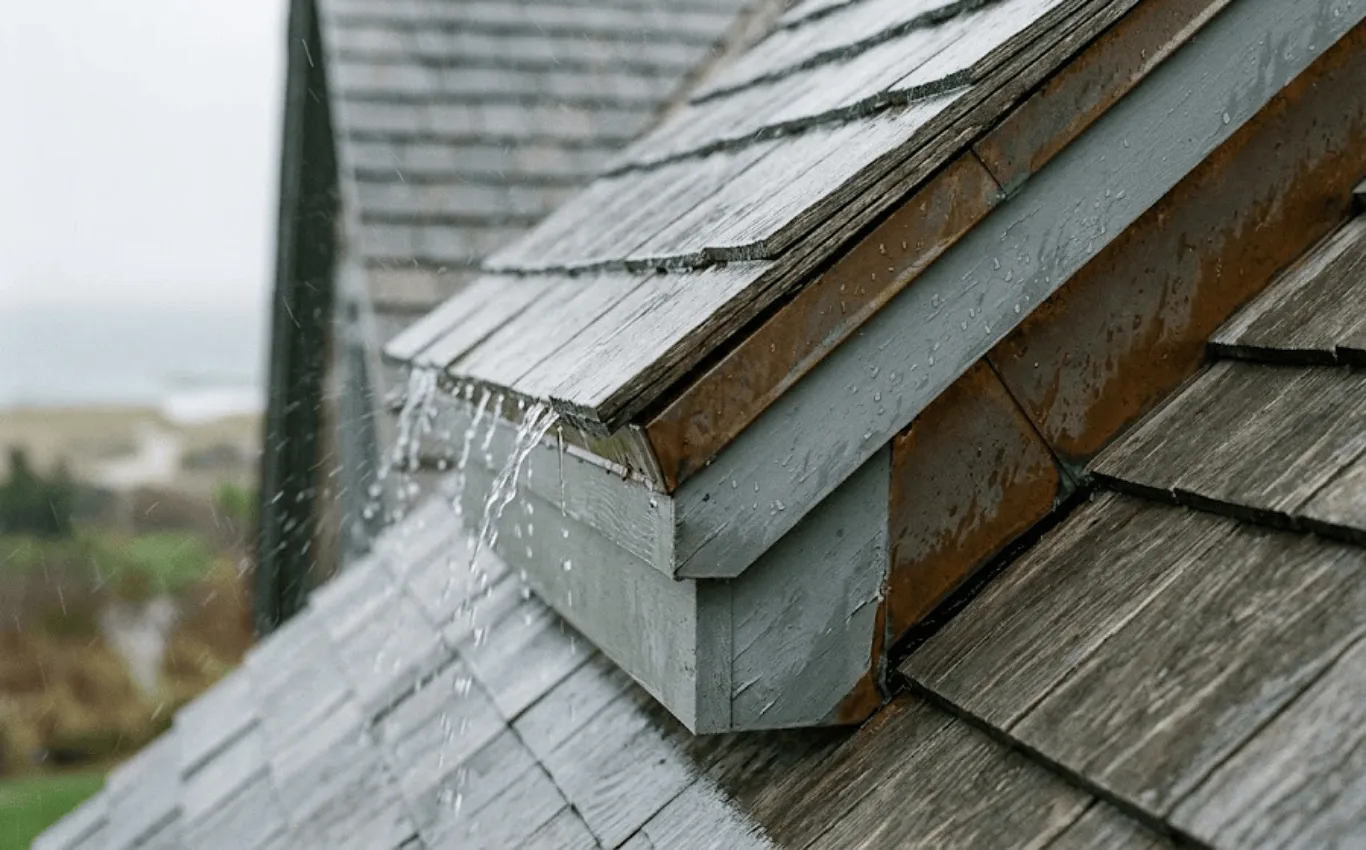
Water doesn’t guess, it follows design.
Gravity Is Only Part of the Story
While gravity pulls water downward, wind and pressure often redirect it sideways and upward. This is especially true in coastal environments like Long Island, where storms push water into seams and transitions that were never meant to stay dry.
Surfaces Don’t Stop Water, They Guide It
Roofing materials and siding don’t block water completely, they guide it across the surface. If that guidance isn’t intentional, water will find inconsistencies in the system and exploit them.
Small Gaps Become Long-Term Problems
A minor misalignment or poorly fitted edge can redirect water into hidden areas. Over time, these small issues turn into rot, mold, or structural damage. This is why precision matters more than material alone.
Custom Metal Defines the Flow of Water
.webp)
Custom fabrication is what gives water a controlled path.
Flashing Is Not Just Protection, It’s Direction
Flashing is designed to intercept water and redirect it away from vulnerable areas. But standard flashing often relies on generic shapes that don’t match real-world roof geometry. Custom-fabricated flashing ensures water moves exactly where it should.
Edges and Transitions Are Where Control Happens
Roof edges, valleys, and wall intersections are where water changes direction. These are also the most vulnerable areas. Precision metal detailing ensures that these transitions are tight, aligned, and capable of handling both gravity and pressure.
Custom Fabrication Eliminates Guesswork
Off-the-shelf components require on-site adjustments, which often introduce inconsistencies. Cedar’s custom fabrication services are designed to fit each structure exactly, removing gaps and reducing reliance on temporary solutions like sealants.
Roofing and Siding Depend on Fabrication
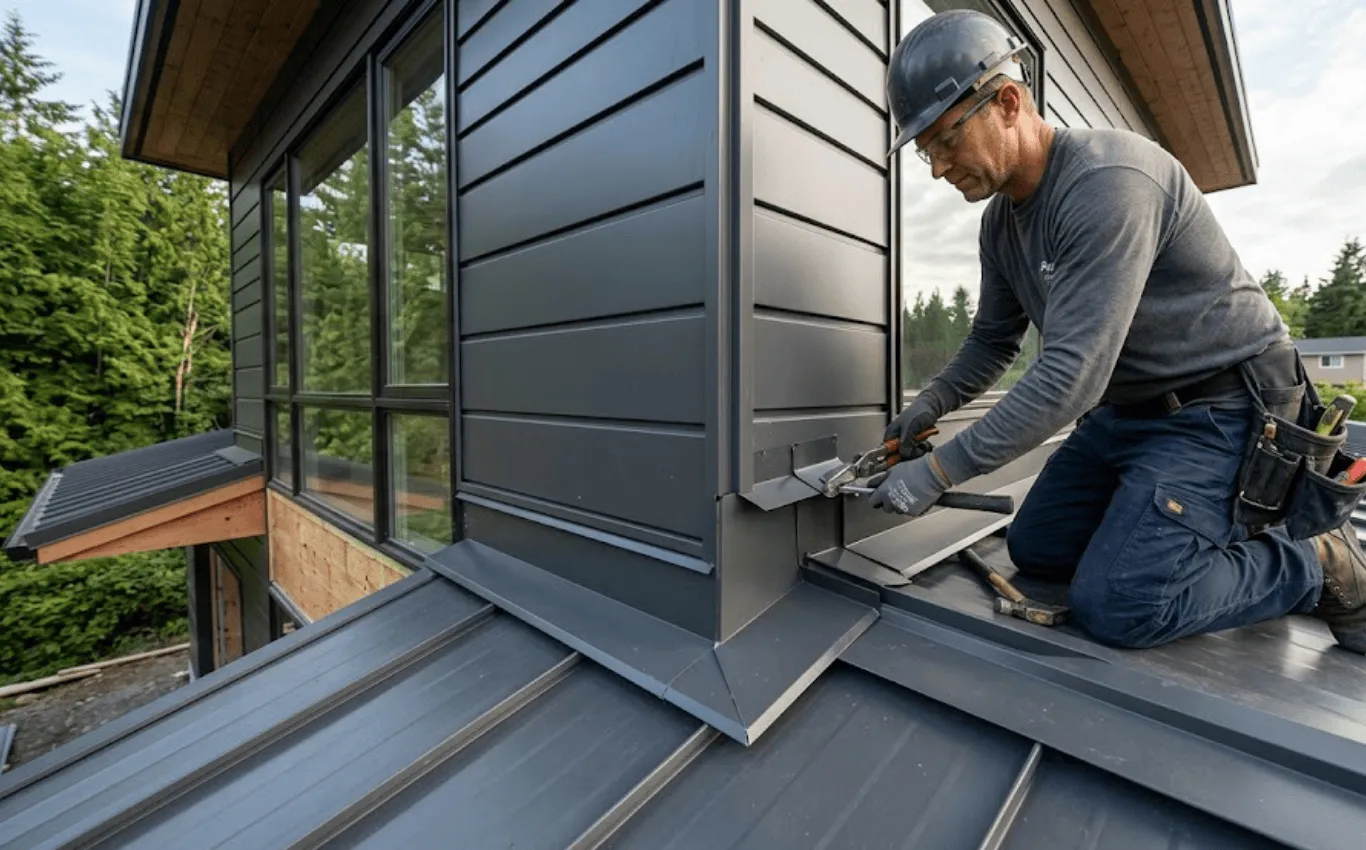
Custom metal is the connection between systems, not an accessory.
Roofing Systems Rely on Proper Drainage
A high-quality roofing system is only as effective as its ability to move water off the structure. Without properly designed metal transitions, even premium materials can fail.
Siding Needs Controlled Water Exit Points
Water that travels down exterior walls must be directed away from the structure at the base. Without proper fabrication, moisture can become trapped behind siding systems, leading to hidden damage over time.
Transitions Connect Everything Together
Roof-to-wall intersections, dormers, and penetrations are where systems meet. Custom fabrication ensures these connections are sealed, aligned, and built to handle real-world conditions.
You can see how these systems come together in real-world applications across Cedar’s completed work on the Projects page.
Coastal Conditions Make Precision Non-Negotiable
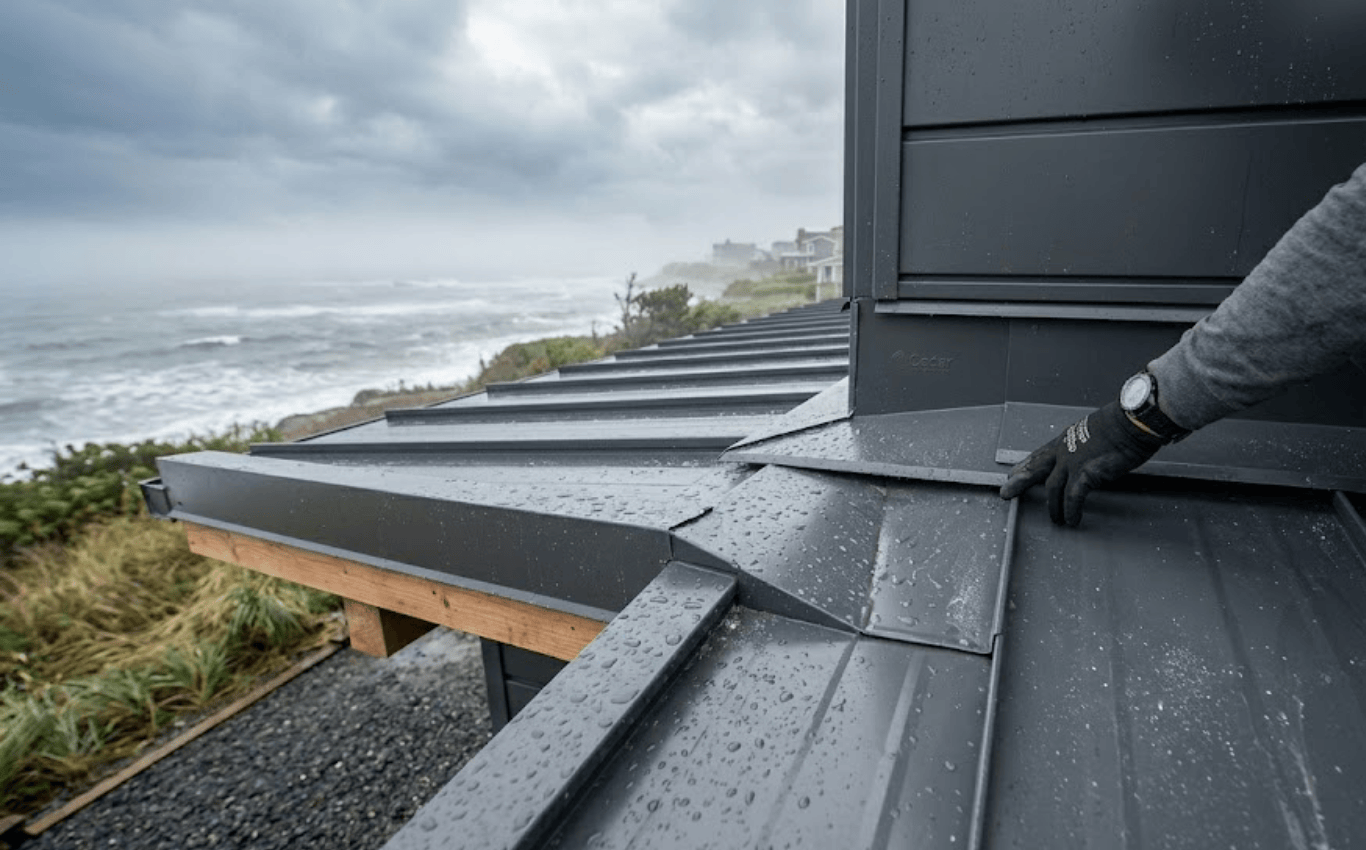
Long Island homes face conditions that demand more than standard solutions.
Wind Changes Water Behavior
Coastal winds push water into areas it wouldn’t normally reach. This increases the importance of tight seams and properly designed metal transitions.
Salt Air Accelerates Weakness
Salt exposure speeds up corrosion and material fatigue, especially in poorly fabricated metal components. Precision fabrication reduces exposed edges and vulnerable points.
Moisture Exposure Is Constant
Humidity, fog, and ocean air keep surfaces damp even without rain. This constant exposure amplifies the effects of poor detailing and makes precision essential.
Conclusion: Water Control Is Designed, Not Assumed
Water will always reach your home. The only variable is what happens next. Homes that perform well over time are not the ones that try to block water completely, but the ones that control where it goes. Custom metal fabrication is what makes that control possible. It directs flow, protects transitions, and ensures that water exits the structure safely. When fabrication is treated as a core part of the system, not an afterthought, the result is a home that stays dry, durable, and resilient in every condition.
share via