


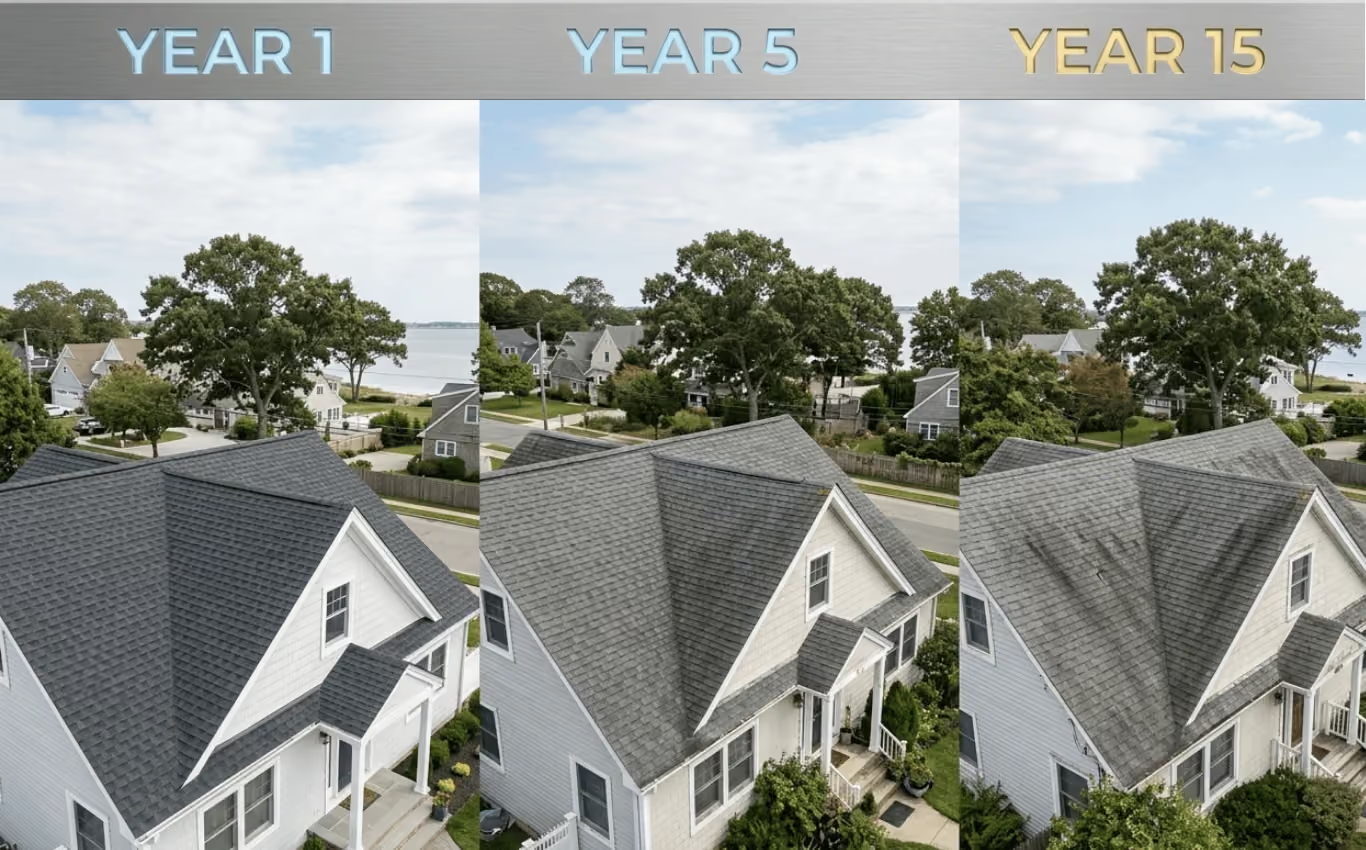




© 2026 Cedar Solutions Roofing powered by Tauri social.
Ready to Upgrade Your Roof for 2027 and Beyond?
Explore Our Roofing Services


Roof replacement in 2027 is about more than choosing attractive shingles or updating an aging exterior. Long Island homeowners should consider durability, energy performance, coastal weather exposure, and how every roofing component works together.
From traditional cedar to architectural asphalt and modern metal roofing, the right choice depends on your home's design and environment. Understanding these priorities can help you make smarter decisions before starting your next roofing project.
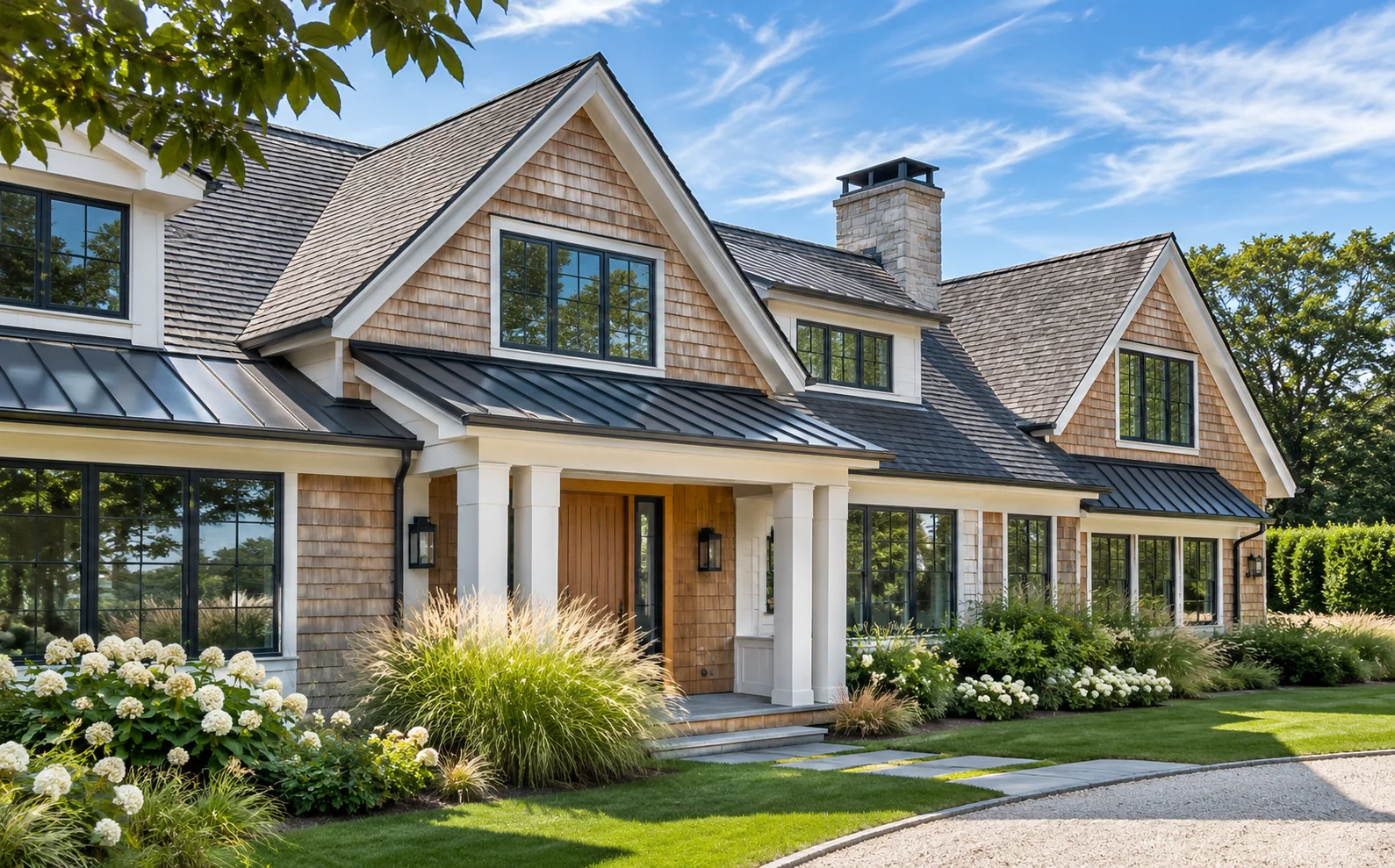
Modern roofing decisions involve balancing architectural style, durability, maintenance, and long-term value. For Long Island homes, choosing materials that suit local weather conditions is especially important.
Cedar roofing continues to appeal to homeowners who appreciate natural texture and traditional Hamptons architecture. Its distinctive appearance creates warmth and character, although proper installation and ongoing maintenance remain essential.
Architectural asphalt shingles offer a practical combination of design flexibility, weather protection, and affordability. With different profiles and colors available, they can complement both traditional and contemporary Long Island homes.
Metal roofing provides a refined appearance that works particularly well with contemporary architecture. When properly specified and installed, it can offer excellent durability, efficient water shedding, and long-term performance.
Explore Cedar Solutions Roofing's roofing services to learn more about roofing materials and installation options.
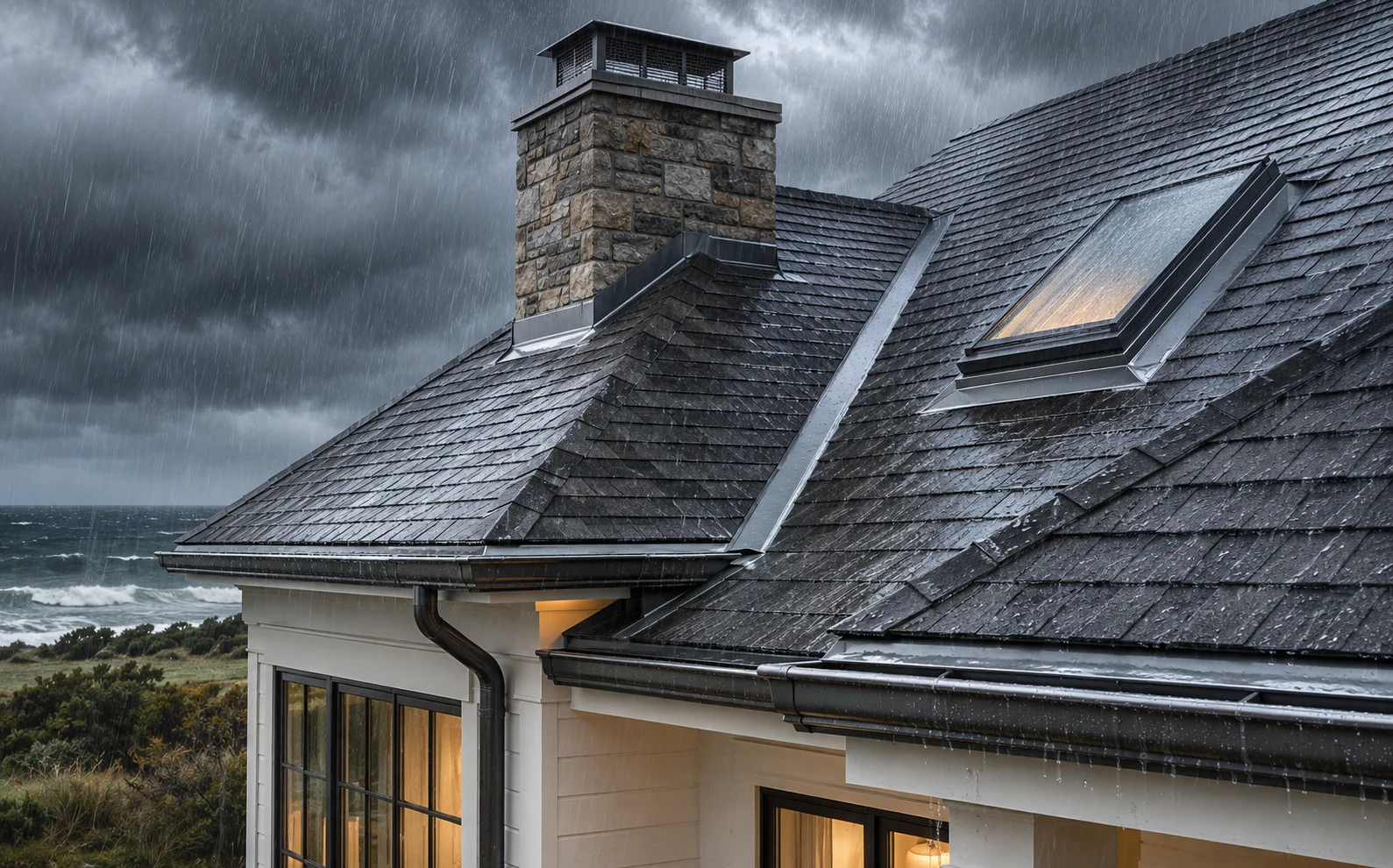
Long Island's coastal environment creates challenges that extend beyond everyday rain and seasonal temperature changes. Roofing systems must be designed with wind exposure, moisture management, and changing weather conditions in mind.
Even premium roofing materials can underperform when fastening methods and installation details are inadequate. Choosing a roofing system suited to the property's wind exposure helps improve protection during severe weather.
Roof pitch, valleys, flashing, and gutters determine how effectively water moves away from vulnerable areas. Planning drainage before selecting roofing materials helps prevent unnecessary complications and supports long-term performance.
Chimneys, skylights, walls, and roof penetrations require precise flashing to prevent water from entering the structure. Professional custom fabrication can help create properly fitted metal details for complex rooflines and architectural transitions.
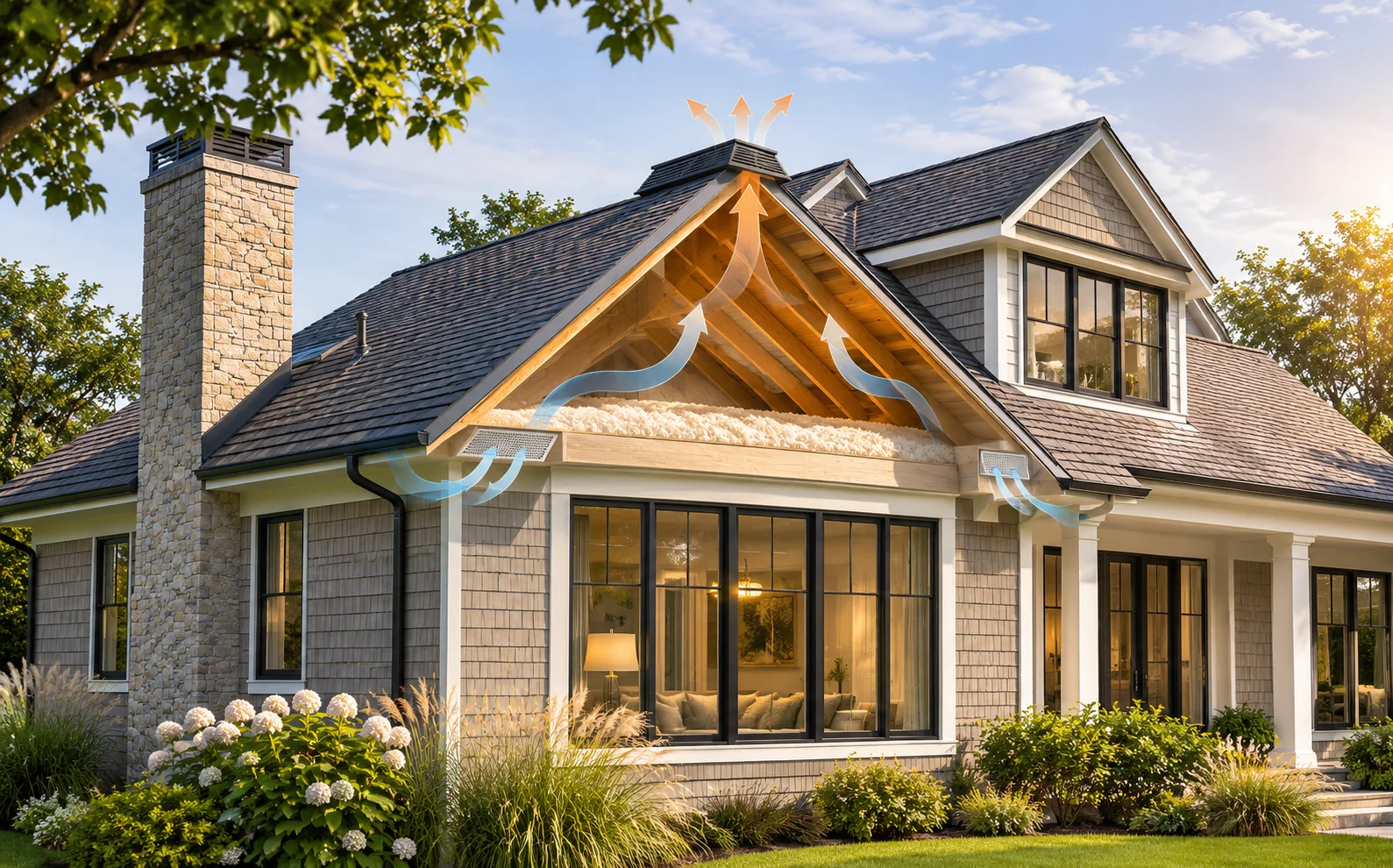
A roof's performance depends on more than the material visible from outside. Insulation, ventilation, and solar exposure all influence indoor comfort, moisture control, and the durability of the roofing assembly.
Darker roofing surfaces generally absorb more solar energy than lighter, more reflective alternatives. However, the impact on indoor temperatures also depends on insulation, ventilation, roof construction, and the home's overall design.
A correctly designed ventilation system can help control heat and moisture accumulation in applicable attic assemblies. Ventilation requirements vary by roof design, making professional evaluation important before installation.
Roofing materials alone cannot guarantee better energy efficiency or lower utility bills. Coordinating the roof assembly with appropriate insulation and air sealing can improve overall building performance.
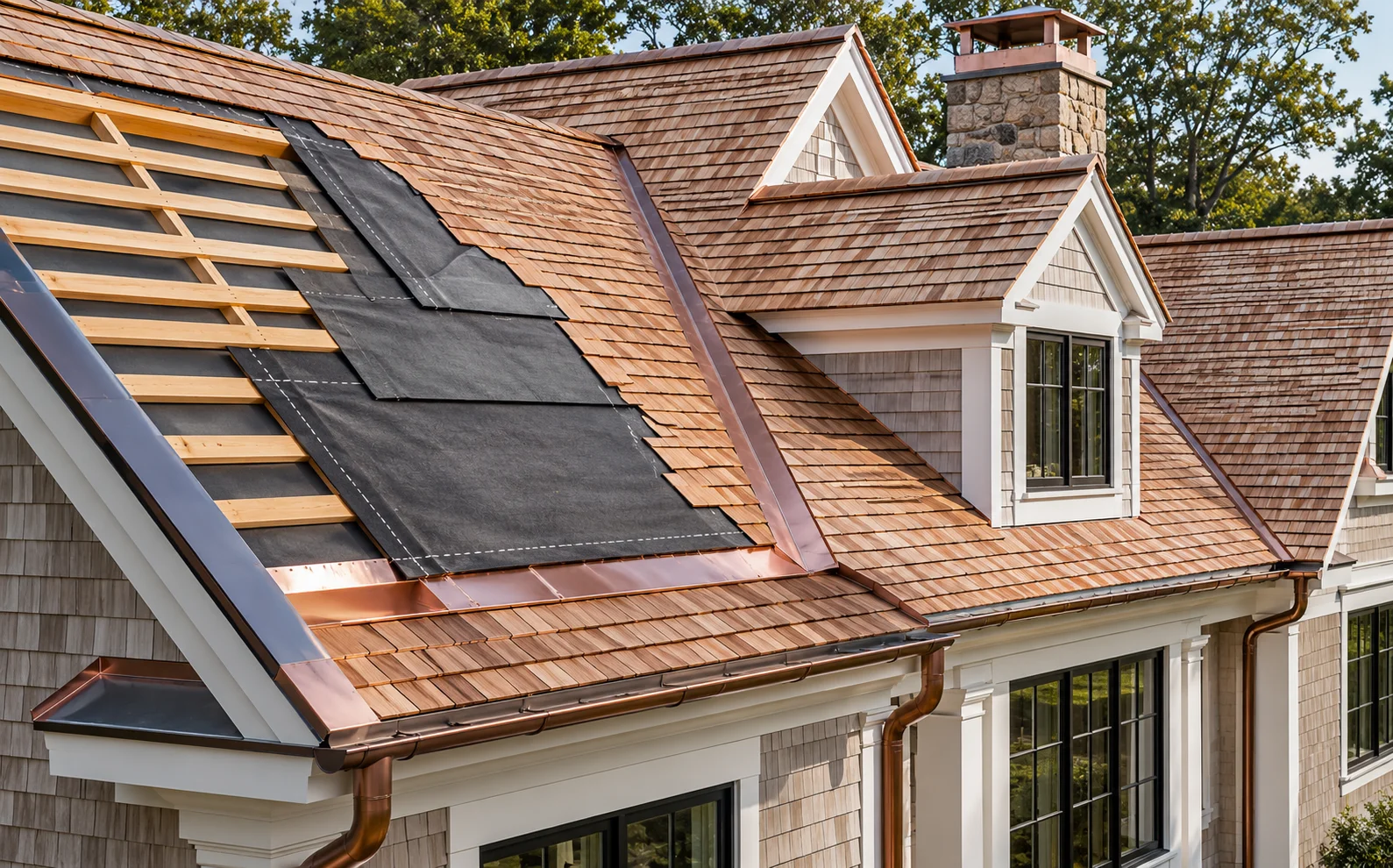
A successful roof replacement involves more than installing a premium exterior material. Long-term protection depends on the quality of the underlying components, installation details, and ongoing maintenance.
Roofing underlayment acts as a secondary water-shedding layer beneath the finished roofing material. Selecting the appropriate product and installing it correctly helps strengthen the overall roofing assembly.
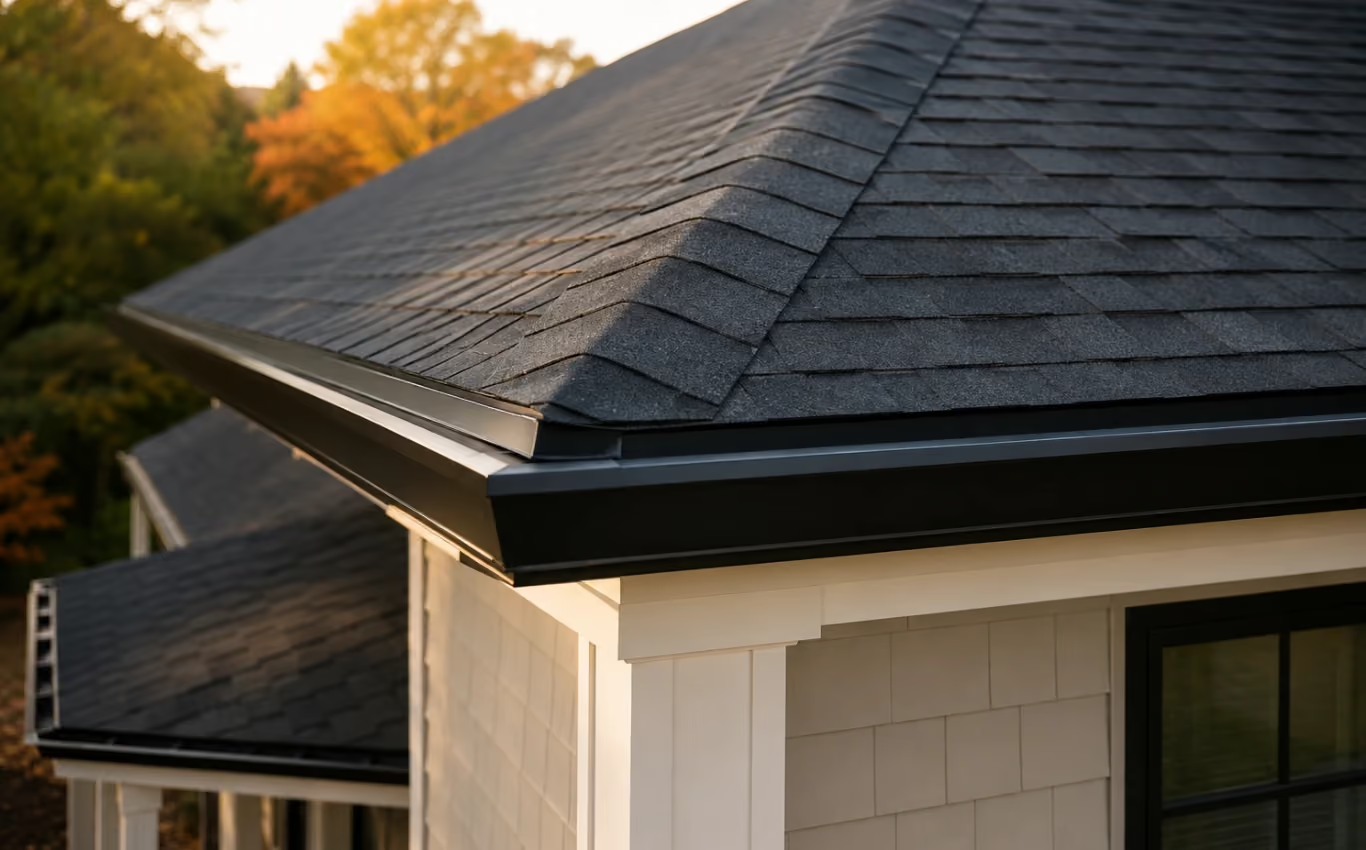
Roof edges, valleys, and material transitions are among the areas where installation precision matters most. Carefully designed flashing, edge details, and compatible components help protect these vulnerable connections.
Routine roof inspections can identify damaged materials, drainage concerns, and developing problems before they become more extensive. Homeowners should also arrange an inspection after significant storms when damage is suspected.
Explore our completed projects to discover how thoughtful roofing design and professional craftsmanship contribute to Long Island homes.
Roofing in 2027 should focus on more than appearance or the latest materials. For Long Island homeowners, the strongest investment comes from combining suitable roofing products, coastal weather protection, effective drainage, and carefully planned installation.
Whether you're considering cedar, architectural asphalt, or metal roofing, every component should support the home's architecture and long-term performance. Working with an experienced roofing contractor can help you create a system that looks beautiful while providing dependable protection for years to come.
© 2026 Cedar Solutions Roofing powered by Tauri social.