


© 2026 Cedar Solutions Roofing powered by Tauri social.
Ready for custom metalwork that elevates your exterior without overpowering it?
Explore Custom Fabrication


Some of the most impressive details on a luxury home are the ones you barely notice. Clean roof edges, precise transitions, carefully formed flashing, and metal components that seem to disappear into the architecture can make an exterior feel effortless. Yet achieving that simplicity often requires considerably more planning and craftsmanship than a detail designed to stand out.
This approach is becoming increasingly important in modern exterior design. Homeowners want cleaner lines, fewer visual interruptions, and materials that appear naturally integrated rather than added afterward. For Long Island homes, Custom Fabrication can help achieve that refined appearance while solving practical challenges around roofing, siding, drainage, and weather protection. The goal is not always to make the metalwork visible. Sometimes, the best result is when you notice how clean the home looks without immediately knowing why.
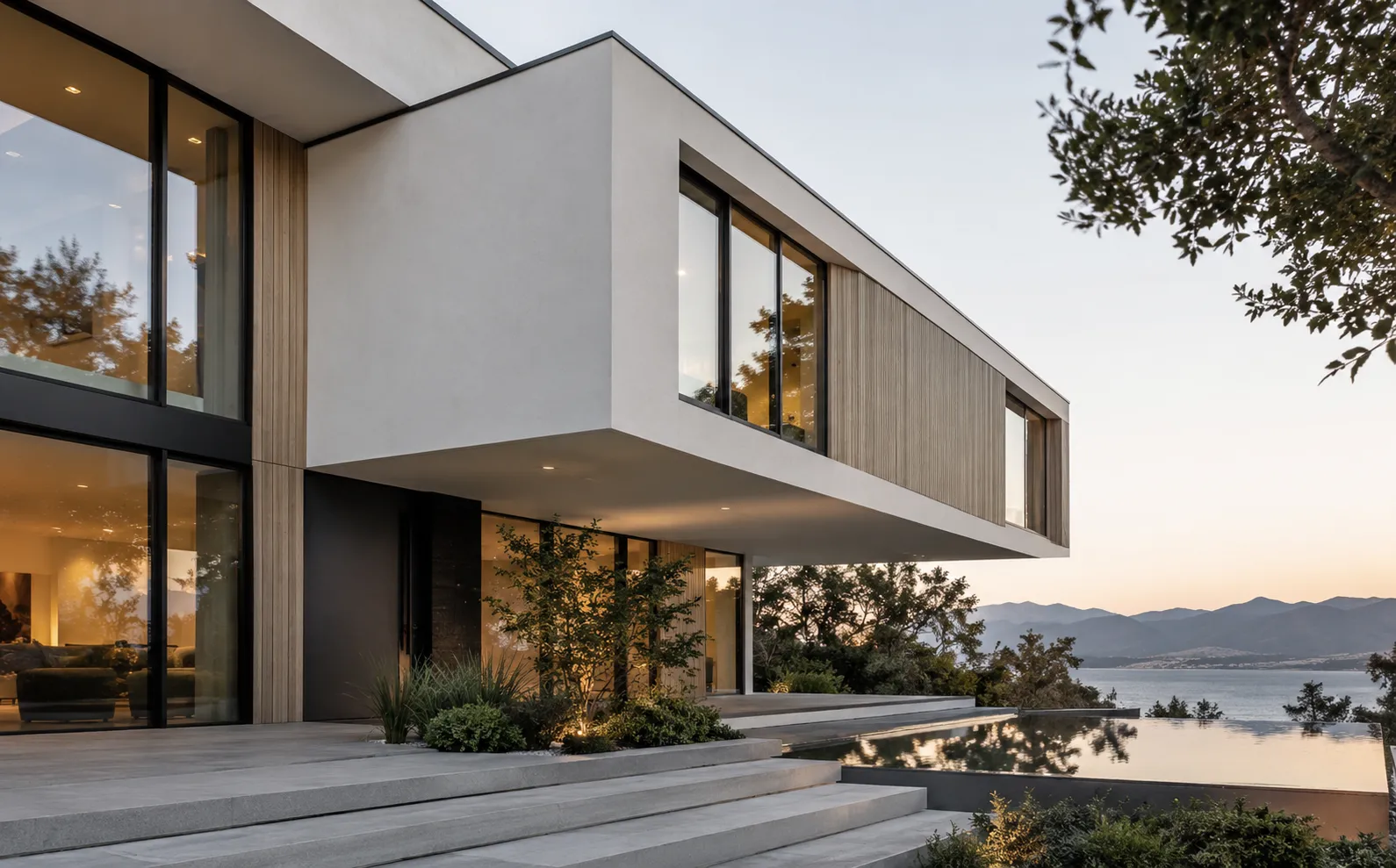
Exterior design has increasingly moved toward cleaner compositions where materials, rooflines, windows, and transitions feel deliberately connected. Instead of adding decorative elements everywhere, many refined homes rely on fewer details executed with greater precision. Custom metalwork fits naturally into this approach because it can be shaped specifically around the architecture.
Minimalist architecture may look simple, but simplicity leaves very little room for inconsistency. When there are fewer decorative elements to distract the eye, edges, joints, alignments, and transitions become much more noticeable.
A metal component that is slightly oversized, poorly aligned, or awkwardly terminated can interrupt an otherwise clean elevation. Custom fabrication allows these components to be formed around the actual dimensions and geometry of the home, helping create tighter lines and more intentional transitions.
The result is metalwork that supports the architecture without visually competing with it.
A well-designed flashing detail or metal transition does not necessarily need to become a focal point. In many applications, its purpose is to create a clean connection between materials while protecting the areas behind them.
When the dimensions, bends, overlaps, and finish are carefully considered, the metal becomes part of the architectural language of the home. Homeowners may never consciously notice the individual component, but they notice that the exterior feels more polished and resolved.
Every unnecessary seam, oversized transition, exposed fastener, or inconsistent edge introduces another visual element to the façade. Individually, these details may seem insignificant. Together, they can make an exterior feel busy.
Invisible detailing takes the opposite approach. By simplifying transitions and coordinating metalwork with surrounding materials, the exterior gains visual continuity. Roofing, siding, windows, and trim begin to feel like parts of one composition rather than separate systems.
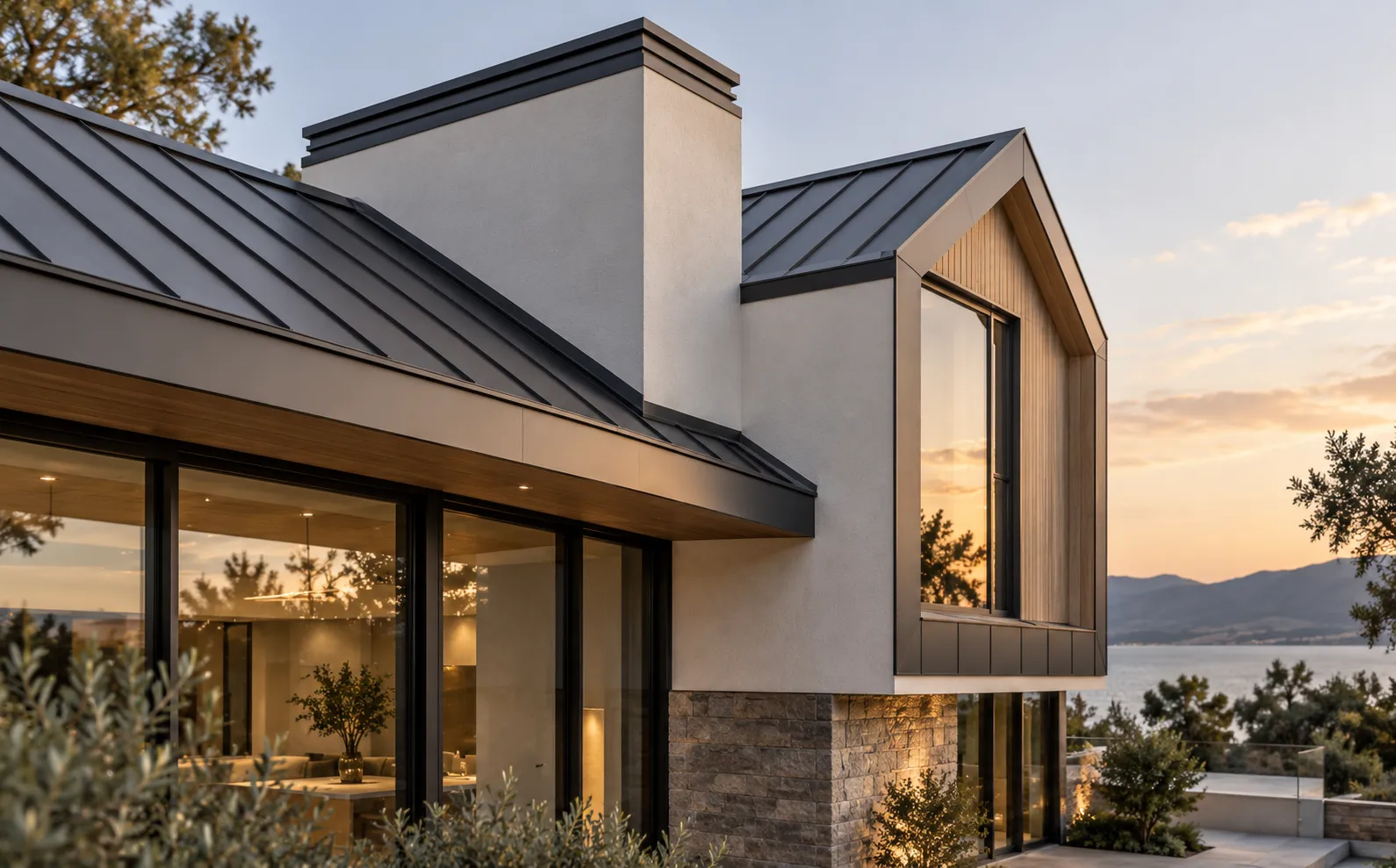
Some of the most challenging areas on any exterior occur where one material ends and another begins. Roofing may meet siding. A roof may intersect a vertical wall. Different roof slopes may connect at a valley. Windows, chimneys, dormers, and other architectural features create additional transitions.
These are exactly the locations where custom metalwork becomes especially valuable.
Where a roof meets a wall, the transition must manage water while remaining visually compatible with both surfaces. Standard components may work in straightforward conditions, but custom architecture frequently creates dimensions and angles that require a more tailored approach.
Precisely formed metal can follow those conditions more closely, creating a transition that performs its function without becoming an oversized visual interruption.
This also demonstrates why roofing and fabrication should be considered together. The metalwork is not an accessory added after the roofing system is complete. It is part of how the roof manages its most complicated connections.
Modern homes often combine different siding orientations, profiles, or exterior materials. Each change creates a line that must be finished intentionally.
Custom metal components can create cleaner separation between materials while helping manage moisture behind the exterior. When the proportions and finish complement the Siding System, these transitions can appear almost effortless.
The eye sees a crisp architectural break rather than the individual pieces required to create it.
Custom homes are full of conditions that do not conform neatly to standard dimensions. Dormers, unusual roof pitches, parapets, chimney transitions, complex corners, and intersecting rooflines can all create unique geometry.
Trying to force generic components into these locations can produce unnecessary seams or awkward transitions. Fabricating pieces specifically for the condition allows the metal to follow the architecture instead of requiring the architecture to accommodate the metal.
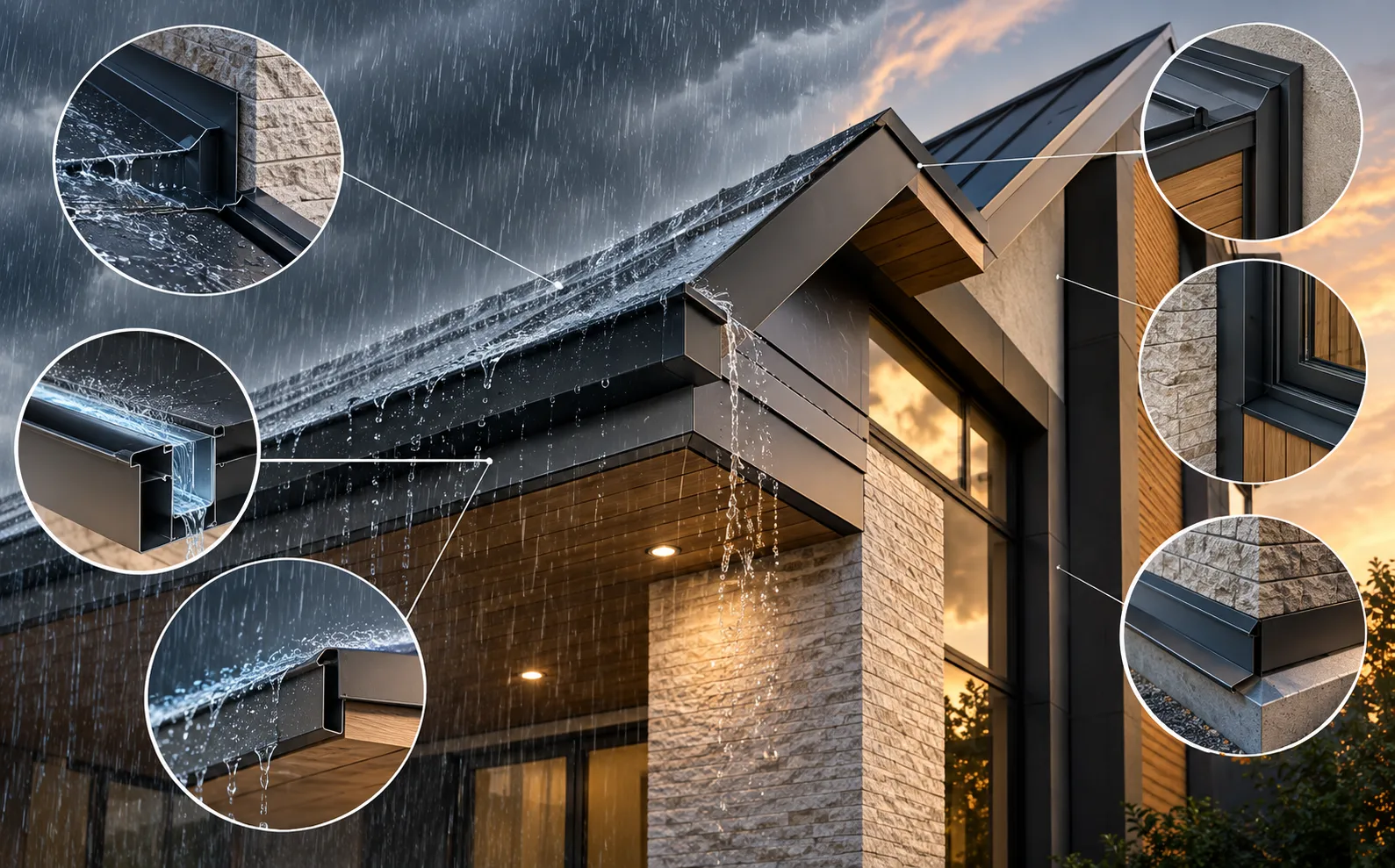
A detail can be visually subtle while performing an important function. Much of exterior metalwork exists to control water, protect vulnerable transitions, reinforce edges, or create durable connections between different building materials.
That performance becomes even more important when the goal is to make the detail visually disappear.
Flashing is one of the clearest examples of invisible performance. When properly designed, it directs water away from vulnerable joints and helps prevent moisture from moving behind roofing or exterior materials.
Homeowners may rarely notice flashing when it is working correctly. That is exactly the point. The component performs continuously without becoming a dominant part of the home's appearance.
The perimeter of a roof may appear simple from the ground, but it includes important transitions between roofing materials, fascia, gutters, and other exterior components.
Carefully fabricated edge details help create a crisp termination while supporting proper water movement. On contemporary homes in particular, these thin architectural lines can have a surprisingly large influence on how refined the roof appears.
Luxury exterior design should not only look clean on installation day. The details behind that appearance need to continue managing weather exposure over time.
Well-planned metalwork helps protect areas where water naturally concentrates or where different materials move and meet. By integrating those components into the design from the beginning, performance can be achieved without sacrificing the clean aesthetic homeowners want.
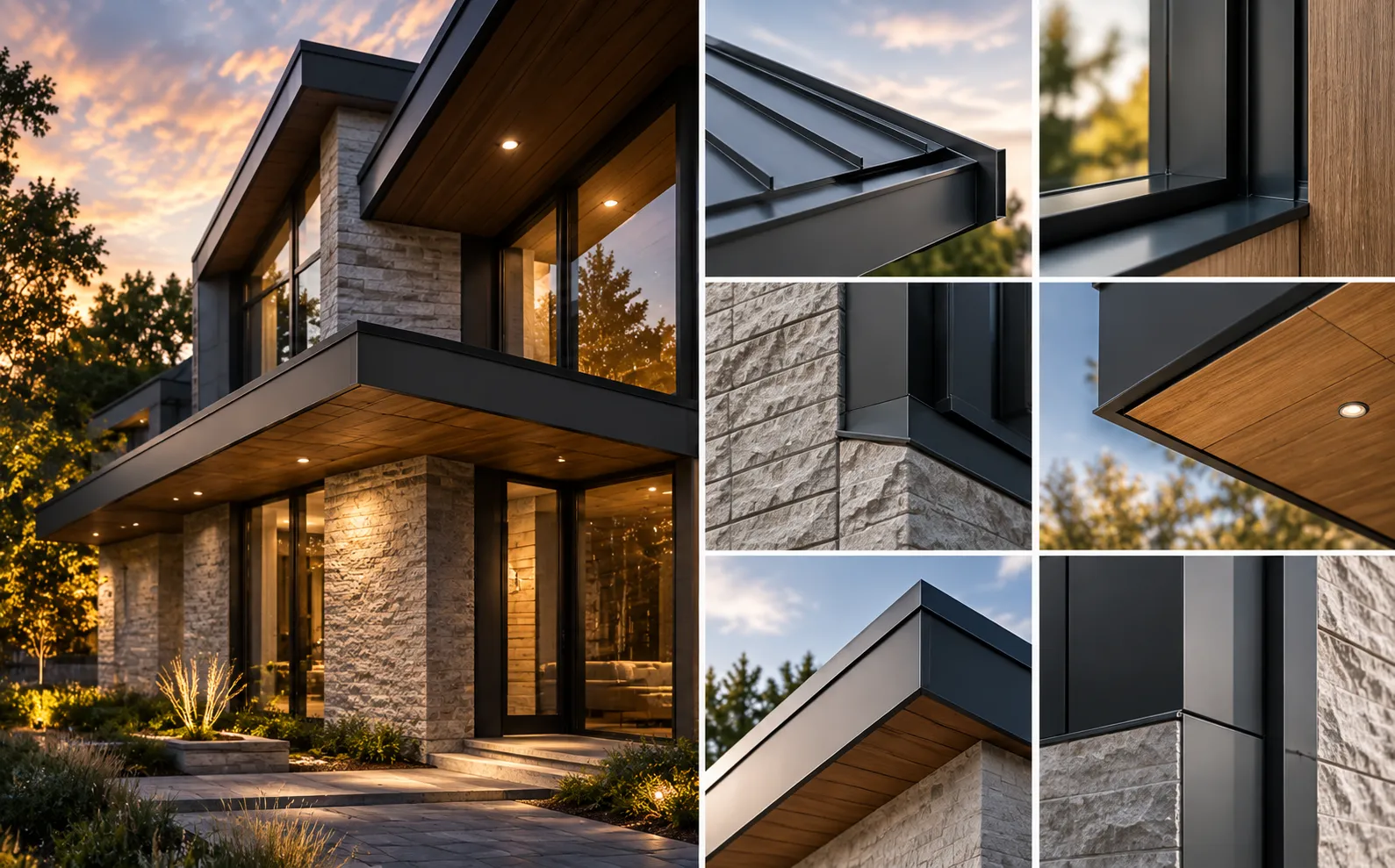
Invisible detailing does not mean every piece of metal must literally be hidden. Instead, it means the metalwork should feel intentional enough that it belongs naturally within the architecture.
Sometimes that means disappearing into the surrounding materials. In other situations, it means creating one precise line that quietly complements the home.
The finish of architectural metal can determine whether it blends into the exterior or creates deliberate contrast. A finish coordinated with roofing, siding, windows, or trim can help the component recede visually.
In other designs, subtle contrast can define an edge or transition without turning it into a decorative feature. The goal is control: deciding exactly how visible the metal should be rather than allowing the component to become noticeable by accident.
Even premium metalwork can look awkward when its dimensions do not suit the architecture. Width, depth, bend locations, and termination points all influence how heavy or subtle a detail appears.
Custom fabrication gives installers greater control over these proportions. A component can be designed specifically for the scale of the roofline, wall, window, or transition it serves, helping the finished detail feel integrated rather than oversized.
One perfectly executed detail cannot carry an entire exterior. The strongest results come when the same level of precision continues across roof edges, wall transitions, flashing, corners, and other architectural conditions.
That consistency creates something homeowners often recognize without being able to identify a single reason for it: the home simply feels more finished.
Examples of how exterior materials and architectural details come together can be seen throughout Cedar Solutions Roofing's Projects.
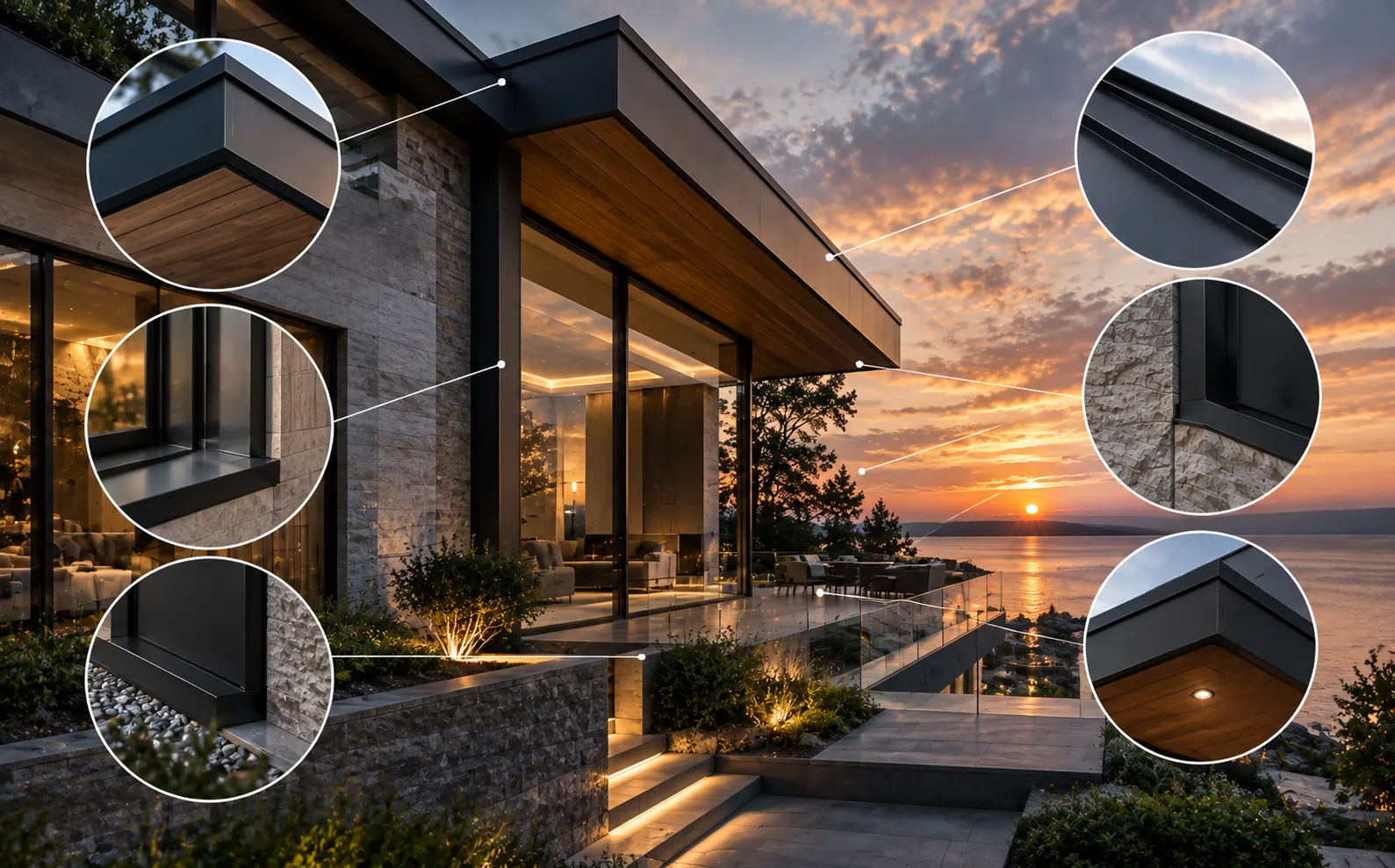
There will always be a place for architectural metalwork that is intentionally visible. Copper accents, standing-seam elements, distinctive metal roofs, and other features can become important parts of a home's identity. But premium design does not always require more visual statements.
Increasingly, sophistication can come from restraint.
When an exterior uses fewer materials and simpler lines, installation quality becomes increasingly important. There is nowhere for poorly resolved transitions to hide.
Custom fabrication supports this style because individual pieces can be designed around exact architectural conditions. Instead of adding visual complexity to solve a problem, careful fabrication can solve the problem while preserving simplicity.
The word “custom” often suggests something designed to attract attention. In fabrication, the opposite can be true.
A custom component may exist precisely because the homeowner does not want to see an awkward standard solution. The craftsmanship is expressed through fit, proportion, alignment, and performance rather than ornamentation.
That makes invisible detailing particularly suited to homes where architectural quality matters more than decorative excess.
Metal flashing, edge profiles, transitions, and fabricated components occupy only a fraction of an exterior's total surface area. Yet these details often sit exactly where major architectural elements meet.
When those intersections are resolved beautifully, roofing feels connected to siding, windows feel integrated into walls, and rooflines terminate cleanly. Small details create continuity across much larger surfaces.
That is why custom fabrication can have such an outsized influence on the finished home.
The most sophisticated exterior details do not always ask to be noticed. Sometimes, their success comes from doing exactly the opposite.
Custom metalwork can quietly resolve complicated rooflines, create cleaner material transitions, manage water around vulnerable areas, and give edges a more precise architectural finish. When designed properly, these components become part of the home rather than additions placed on top of it.
For Long Island homeowners pursuing a cleaner, more refined exterior, invisible detailing represents a different way to think about custom fabrication. The goal is not to add more. It is to make every necessary detail fit so precisely that the architecture becomes the focus—and the craftsmanship behind it almost disappears.
© 2026 Cedar Solutions Roofing powered by Tauri social.