






© 2026 Cedar Solutions Roofing powered by Tauri social.
Ready to protect your coastal home at the detail level?
Start Your Custom Fabrication Consultation


Coastal homes don’t fail because of big mistakes. They fail because of small compromises. On Long Island, salt air, wind-driven rain, and constant moisture exposure test every exterior detail year after year.
In this environment, standard building components and optional upgrades aren’t enough. Homes near the coast don’t need fabrication “options”, they need custom fabrication built specifically for the conditions they face. Anything less leaves the home vulnerable to slow, expensive deterioration that often stays hidden until real damage is done.

What works inland often fails near the water. Coastal exposure changes the rules entirely.
Salt doesn’t just corrode metal, it speeds up every form of material fatigue. Fasteners weaken, coatings break down, and seams degrade far faster than expected. Generic metal components, especially those designed for broad use across different climates, simply aren’t built to withstand this level of exposure. Coastal homes require metalwork designed for durability, compatibility, and long-term resistance, not mass-produced solutions.
Unlike vertical rainfall, coastal storms push water sideways and upward. This forces moisture into joints, overlaps, and transitions that standard details assume will stay dry. Without precision-fit metalwork, water will eventually find a path behind roofing and siding systems, where it can remain trapped and cause damage over time.
In coastal environments, moisture exposure isn’t limited to storms. Morning dew, fog, and humidity keep exterior surfaces damp for extended periods. This constant presence magnifies the consequences of poor detailing and makes “good enough” fabrication unacceptable.

Many exterior systems offer fabrication as an add-on, an optional upgrade rather than a core requirement.
Coastal homes often feature complex rooflines, multiple transitions, and layered materials. Off-the-shelf metal components force installers to cut, bend, and adapt parts on site, introducing stress points and inconsistencies. These compromises may look acceptable at first but quickly become failure points under coastal conditions.
When fabrication is treated as optional, some areas receive custom attention while others rely on generic solutions. This inconsistency creates weak links in the exterior envelope. Water, wind, and salt don’t target the strongest details, they exploit the weakest ones.
Standard systems often rely heavily on caulking to compensate for poor fit. In coastal environments, sealants dry out, crack, and fail much faster than expected. Custom fabrication minimizes reliance on sealants by using engineered overlaps, hems, and transitions that remain secure even as materials move.

Custom fabrication isn’t about adding features, it’s about designing protection into the structure itself.
Metal expands and contracts with temperature changes. Custom-fabricated components are designed to allow controlled movement without opening gaps. This flexibility prevents fastener fatigue and reduces stress at seams, helping systems remain watertight over time. Cedar’s custom fabrication services are built around this principle.
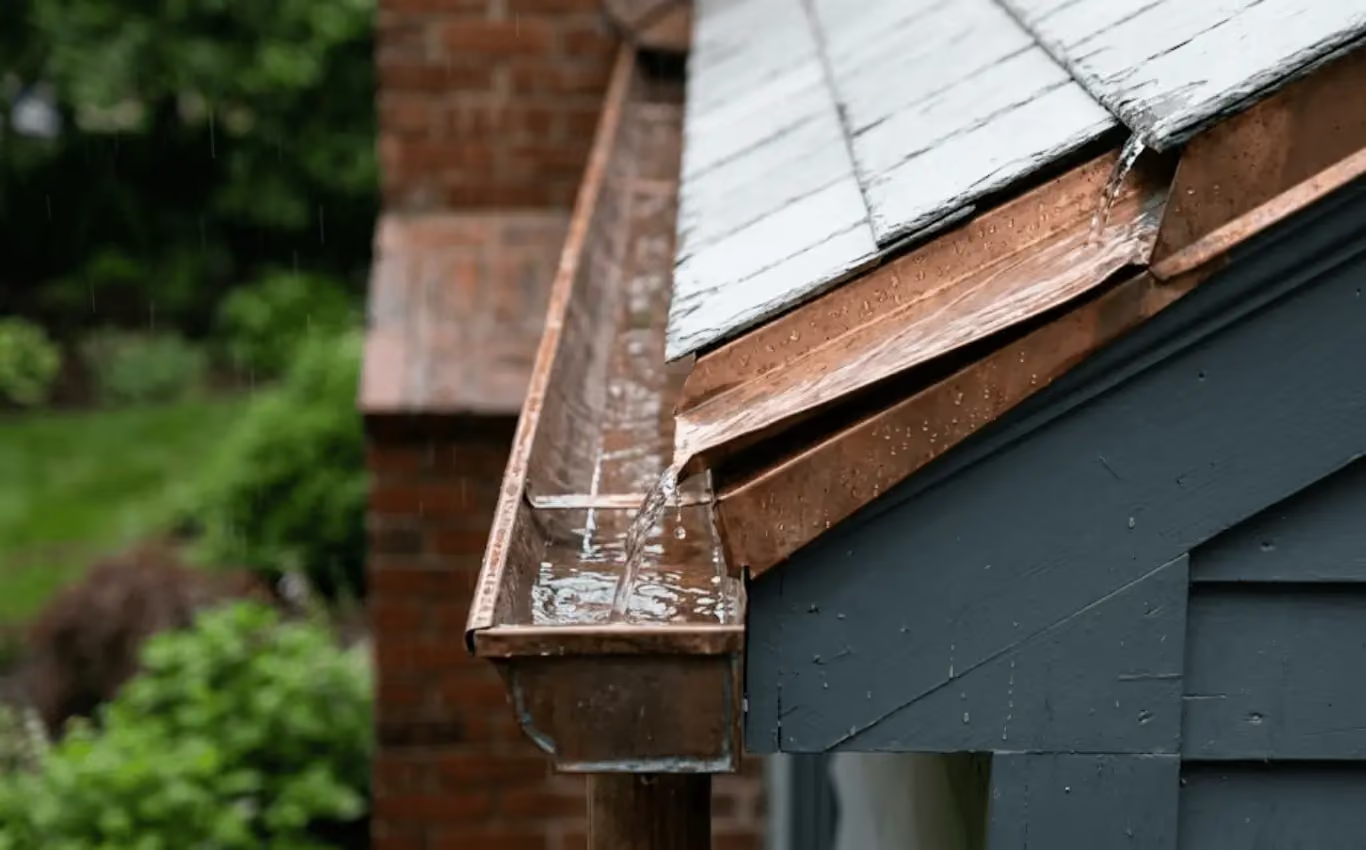
The goal isn’t to stop water completely, it’s to guide it safely away. Custom metal details shape how water flows across rooflines, valleys, and transitions, ensuring it exits the structure quickly rather than pooling or backing up. This approach works hand-in-hand with professionally designed roofing systems to manage water at every level.
One of the most common coastal failures occurs where roofing meets siding. Without properly fabricated transitions, water can slip behind siding and remain hidden for years. Custom fabrication ensures roofing and siding systems function as a unified envelope, protecting both appearance and structure.

In coastal construction, durability comes from consistency.
Roof-to-wall intersections, chimneys, dormers, and edge details are where failures begin. Treating fabrication as optional means accepting vulnerabilities by design. Coastal homes require every transition to be engineered, not improvised.
Much of what protects a coastal home is invisible once construction is complete. Properly fabricated metalwork preserves framing, insulation, and interior finishes by keeping moisture where it belongs, outside. Many examples of this approach can be seen in Cedar’s completed coastal projects showcased on the Projects page.
Interior repairs caused by water intrusion often cost far more than proper fabrication upfront. Rot, mold remediation, and structural repairs are the result of skipped details, not unavoidable conditions. Coastal homes that invest in full fabrication from the start avoid these long-term expenses.
Coastal construction isn’t about checking boxes or selecting upgrades from a list. It’s about commitment to precision at every detail. Fabrication “options” assume average conditions and limited exposure, assumptions that simply don’t apply near the water. Coastal homes demand custom fabrication as a baseline requirement, not an enhancement. When metalwork is designed specifically for coastal conditions, homes don’t just survive the environment, they age gracefully within it.
© 2026 Cedar Solutions Roofing powered by Tauri social.