







© 2026 Cedar Solutions Roofing powered by Tauri social.
Ready to build a roof that manages water before problems begin?
Plan Your Roofing System


When homeowners begin planning a new roof, the conversation often starts with materials. Asphalt shingles, cedar, metal, colors, textures, and architectural styles naturally attract attention because they define what the finished roof will look like. But before choosing what covers the roof, there is a more fundamental question to answer: where will the water go?
A roof is not simply a protective surface. It is a carefully designed drainage system that must collect rainwater, move it across changing slopes, guide it through valleys and transitions, and ultimately direct it safely away from the home. On Long Island, where heavy rainfall, coastal weather, and seasonal storms can place significant demands on an exterior, drainage should influence roofing decisions from the beginning. Designing around water movement first helps ensure that the material selected later becomes part of a complete Roofing System rather than simply a finished surface.
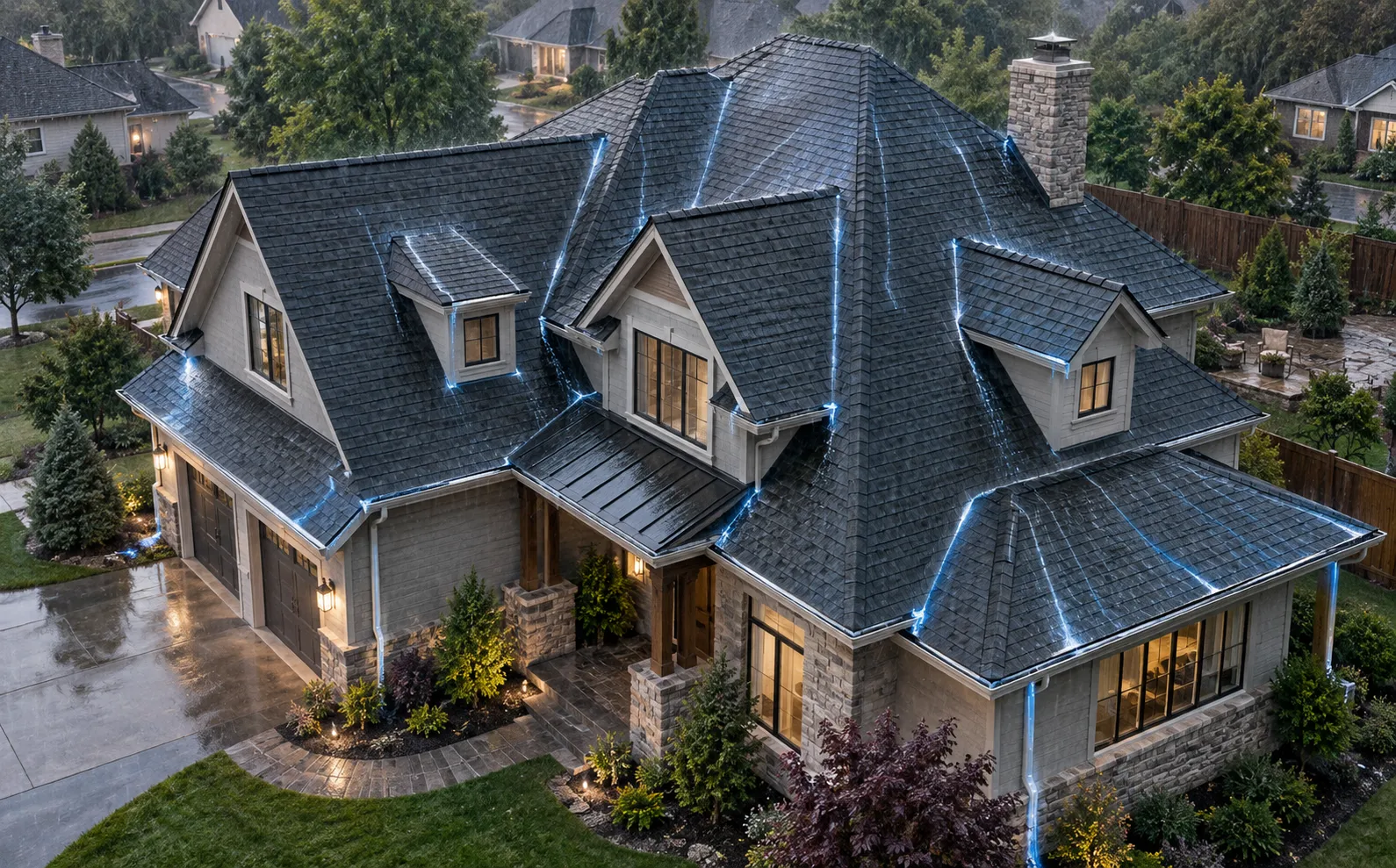
The moment rain reaches a roof, gravity begins determining where it travels. Roof pitch, valleys, dormers, chimneys, additions, overhangs, and intersecting slopes all affect that journey. Understanding these paths before materials are selected helps identify where the roofing system will face its greatest drainage demands.
Pitch has a major influence on drainage. Steeper roof sections generally move rainwater toward the eaves more quickly, while lower-slope areas allow water to travel more slowly across the surface.
That difference matters because roofing materials are designed for specific slope conditions and installation requirements. Instead of choosing a material first and trying to make it work everywhere, the roof's geometry should help determine which products and installation methods are appropriate for each area.
A valley may occupy only a narrow section of the roof, but during heavy rain it can receive runoff from two adjoining slopes at the same time. On complex homes with multiple rooflines, some valleys can become major drainage channels.
These locations require careful planning because water is being concentrated rather than simply shed from one surface. Valley construction, underlayment, flashing, and surrounding materials all need to work together to move that water efficiently without creating vulnerable transitions.
A simple gable roof has relatively predictable drainage paths. Add dormers, intersecting wings, multiple levels, chimneys, and architectural projections, and the water map becomes much more complicated.
One section may send runoff directly toward a gutter, while another directs water toward a lower roof or into a valley. Understanding these relationships before installation makes it possible to design protection around the areas handling the greatest volume of water.
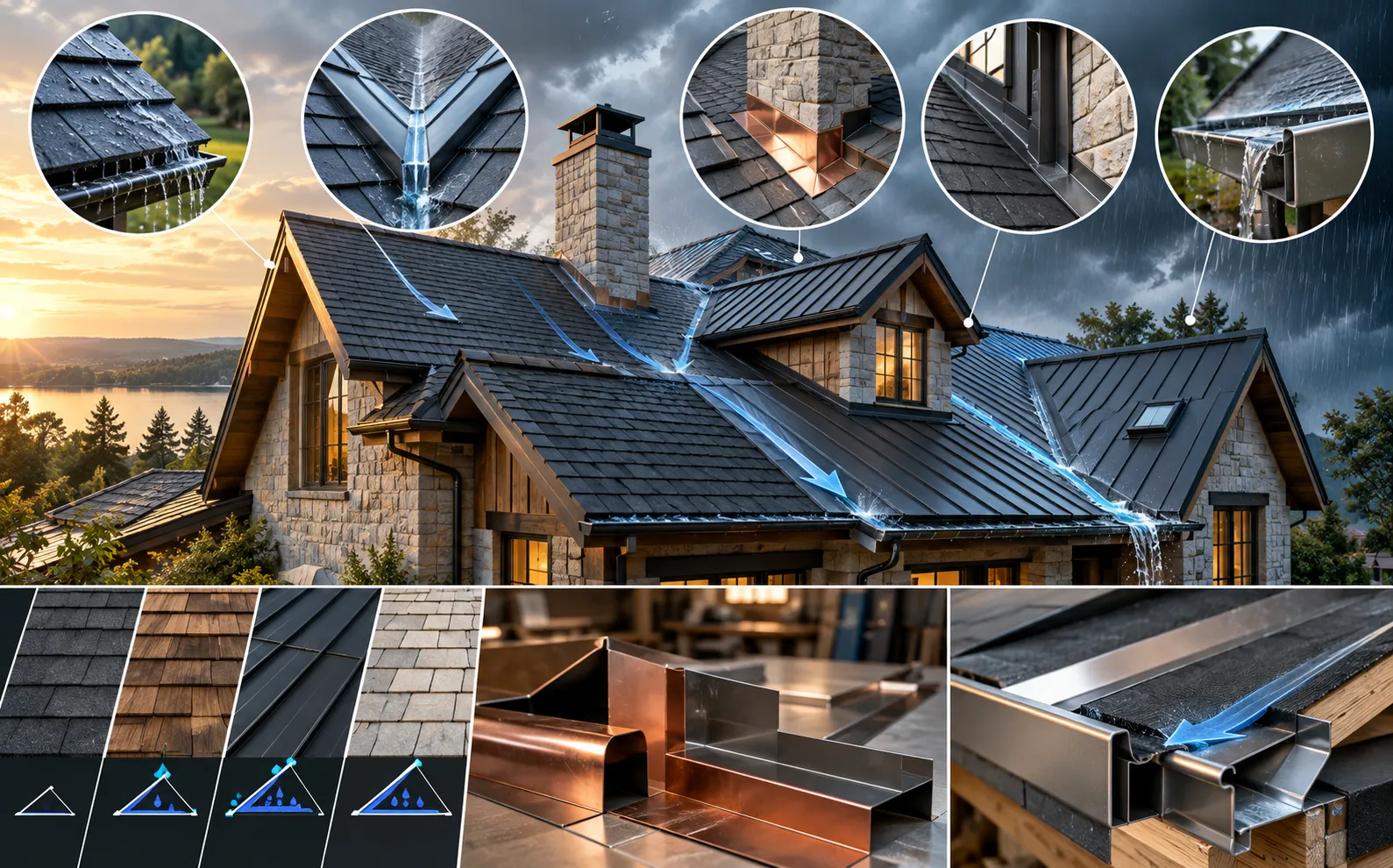
Once the roof's drainage behavior is understood, material selection becomes more informed. Appearance and durability still matter, but they can be evaluated alongside slope, runoff patterns, transition details, and installation requirements.
Different roofing materials have different requirements regarding minimum pitch, underlayment, fastening, and water management. A material that performs beautifully on a steep architectural roof may require a different approach on a lower-slope section.
Homes with multiple roof pitches may even require different roofing solutions across the same structure. Recognizing those conditions early prevents aesthetics from overriding the technical requirements of the roof.
The busiest drainage areas of a roof are often the least noticeable from the ground. Valleys, roof-to-wall intersections, chimney transitions, and lower roof sections may handle substantial amounts of runoff during heavy rain.
In these areas, detailing matters as much as the visible roofing product. Proper underlayment, flashing, and water-shedding transitions help create additional layers of protection where water movement is most concentrated.
Flashing is most effective when it is designed around how water actually moves across the structure. Roof-to-wall connections, chimneys, valleys, edges, and other transitions can require precisely formed components that guide water away from vulnerable joints.
Professional Custom Fabrication allows architectural metal details to respond to the specific geometry of the home instead of forcing generic components into complicated conditions. This is especially valuable on custom residences where rooflines and transitions are rarely identical.
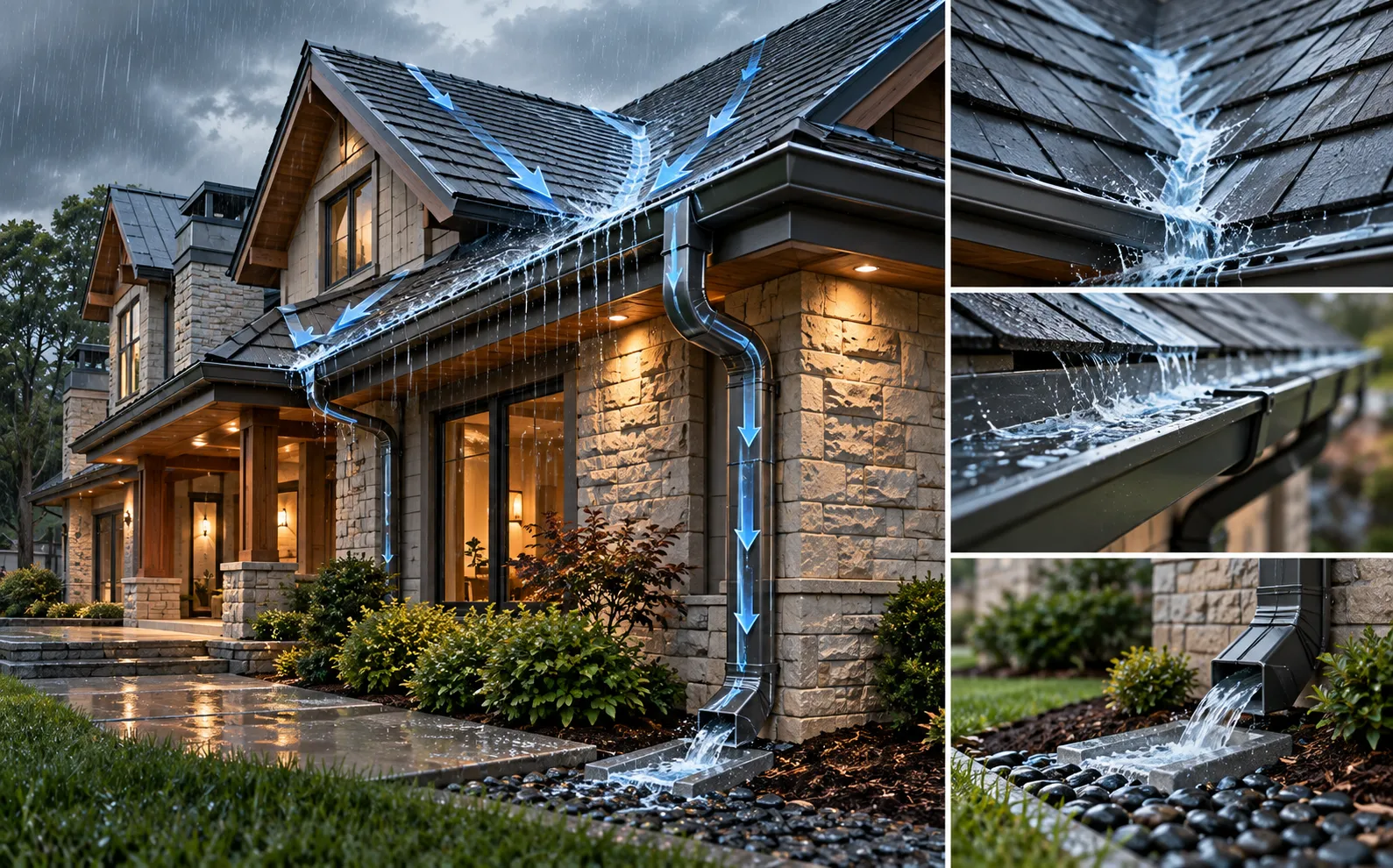
Roof drainage does not stop when water reaches the eaves. Gutters and downspouts must receive the runoff and continue moving it away from the structure. Treating gutters as an afterthought can weaken an otherwise carefully designed roofing system.
Different roof sections do not necessarily deliver the same volume of water to every section of gutter. A long roof slope or concentrated valley can send substantially more runoff toward one location than a smaller, simpler section.
Gutter planning should consider the roof area feeding each section, the locations where water concentrates, and how effectively downspouts can move that water away.
When a valley terminates near the edge of a roof, water may arrive at the gutter with greater speed and concentration than runoff from the surrounding surface. If the transition is not carefully considered, heavy rain can overshoot or overwhelm that location.
Planning the roof and gutter relationship early allows these high-flow areas to be addressed as part of the overall drainage strategy rather than corrected after problems become visible.
Moving water off the roof is only part of the job. Downspouts must also discharge it in a way that does not create unnecessary moisture around siding, foundations, walkways, or landscaping.
The strongest drainage strategy follows water all the way from the highest roof ridge to its final discharge point. Every component along that path should have a clear role.
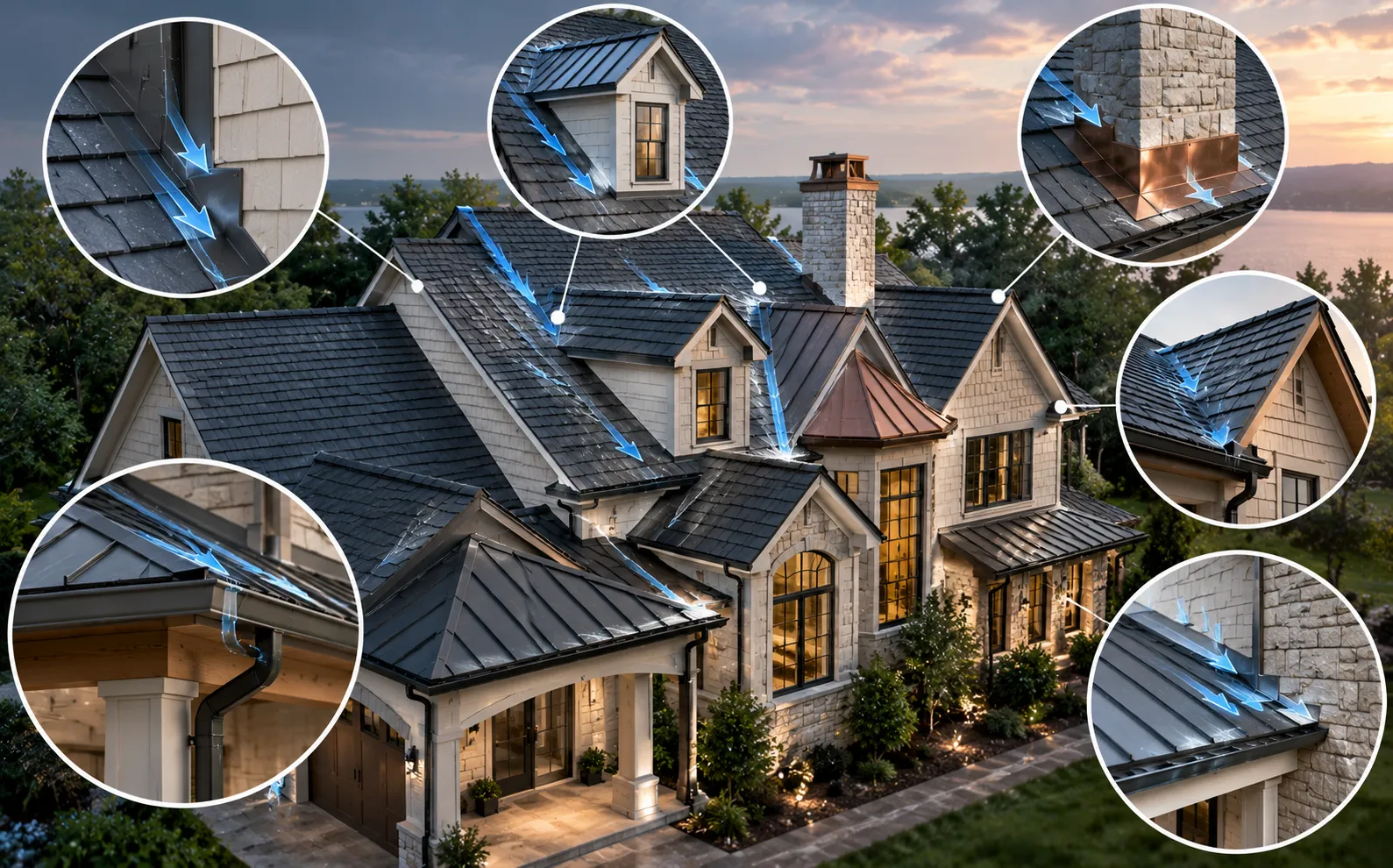
The more detailed the architecture becomes, the more carefully water needs to be managed. Custom homes often feature multiple roof elevations, dormers, wall intersections, porches, additions, and decorative details that create beautiful exteriors but more complicated drainage patterns.
Where a roof meets a vertical wall, water must be redirected without allowing it to move behind the exterior materials. These areas depend heavily on flashing design and precise installation.
Because roofing and Siding meet at these transitions, planning both systems together can create a more complete approach to moisture management.
On multi-level homes, an upper roof can sometimes discharge water onto a lower section. That means the lower roof is not only managing the rain that falls directly onto it but potentially additional runoff from another surface.
These conditions should be recognized during planning so that materials, flashing, and drainage components can be designed for the actual water load the area will experience.
A dormer, chimney, cricket, valley, or wall projection may seem like a small part of the overall roof, but each changes the direction of moving water. Those changes can create concentrated flow, protected pockets, or transitions that require additional attention.
This is why good roofing design considers the architecture as a complete system rather than evaluating each roof plane independently.
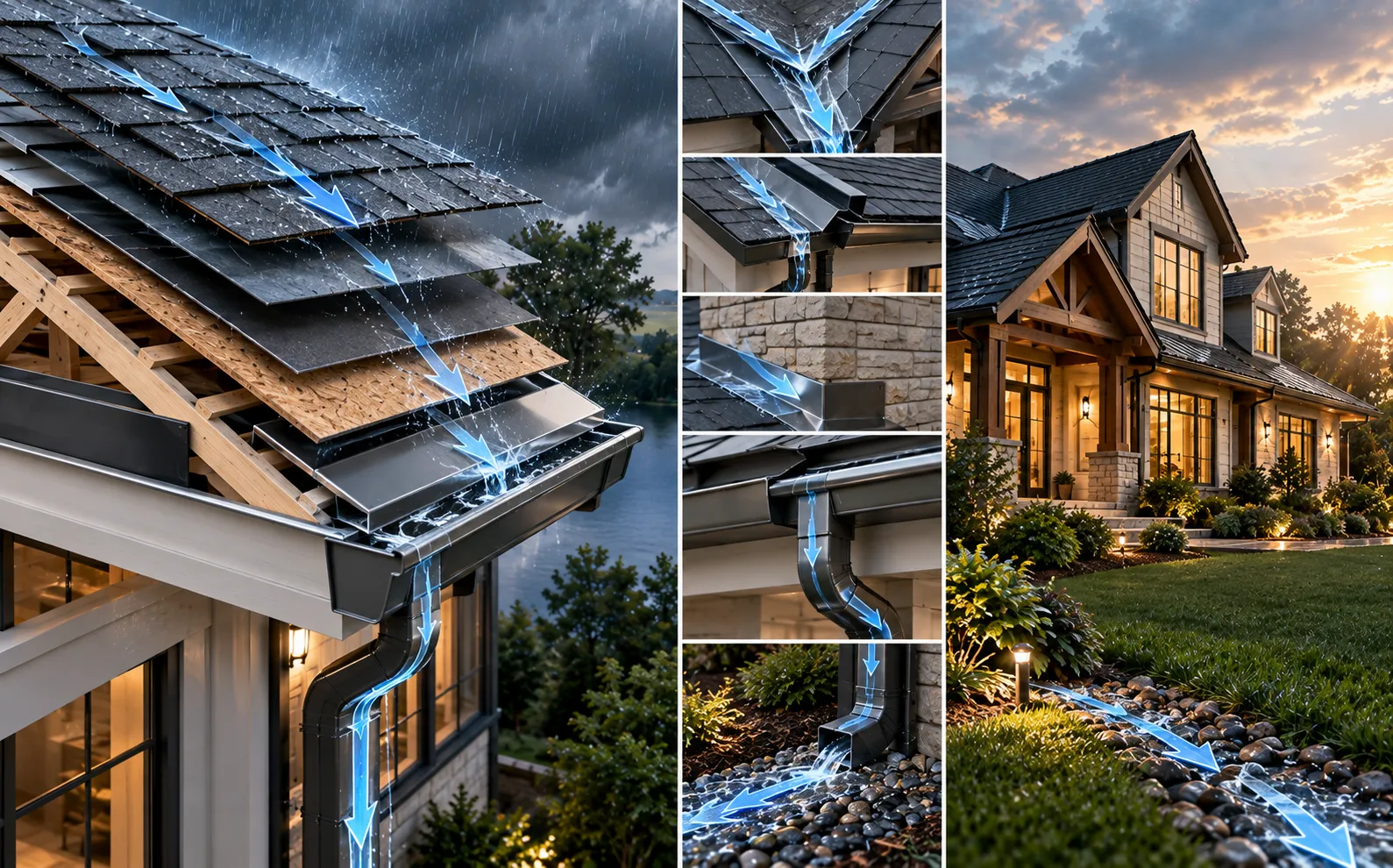
A roof's primary job is not simply to resist rain. It must control where that rain travels, how quickly it moves, what happens when it reaches a transition, and where it ultimately leaves the property.
A well-designed roofing system does not depend on one surface alone. Roofing materials, underlayment, flashing, valleys, drip edges, gutters, and other components create multiple layers that work together.
When drainage is considered first, each layer can be positioned according to the water paths it needs to manage. That creates a more thoughtful system than simply relying on the visible roofing material to handle every condition.
Even a strong drainage design depends on precise installation. Flashing must overlap correctly, valleys must remain clear and properly detailed, edges must direct water where intended, and transitions need to work with gravity rather than against it.
These details are particularly important because many of the most critical drainage components become difficult to see once the finished roof is installed.
Roofing materials still matter enormously. They influence appearance, durability, maintenance, and architectural character. But the best material is one selected with a clear understanding of the roof beneath it.
By evaluating pitch, drainage paths, valleys, transitions, gutter locations, and architectural complexity first, homeowners can make a material decision based on how the roof actually needs to perform - not simply how it should look.
Homeowners can explore Cedar Solutions Roofing's completed Projects to see how roofing, custom metalwork, siding, and architectural details come together across Long Island homes.
Choosing a roofing material may be the most exciting part of planning a new roof, but it should not necessarily be the first. Before selecting colors, profiles, or finishes, the roof needs a clear strategy for managing water.
Every slope, valley, transition, edge, gutter, and downspout contributes to that strategy. When drainage is designed first, roofing materials can be selected to complement the home's architecture while meeting the conditions of the actual roof. For Long Island homeowners, that approach creates something more valuable than an attractive roof: it creates a coordinated exterior system designed to move water safely from the first raindrop to its final destination.
© 2026 Cedar Solutions Roofing powered by Tauri social.